
Villa Joep - Childhood neuroblastoma
Villa Joep is the inspirer of activities aimed at eliminating childhood neuroblastoma. Every year, 25 to 30 young children in the Netherlands are diagnosed with this type of cancer. With a shockingly low survival rate, neuroblastoma is one of the most aggressive forms of childhood cancer.
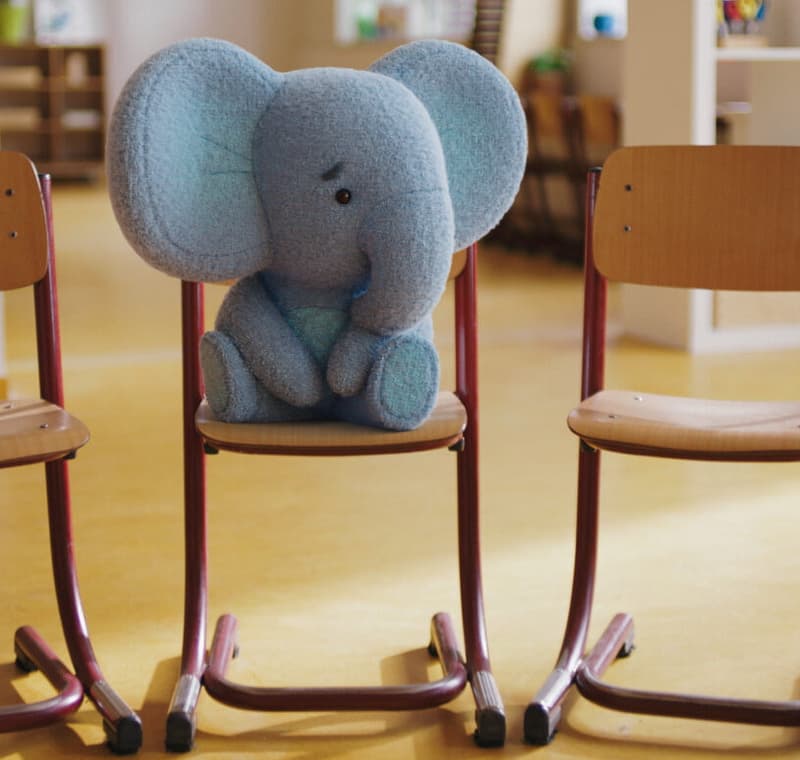
We have been supporting Villa Joep for some time now, enabling them to drive forward and fund research. This includes research into a new radioactive treatment for neuroblastoma. In addition, researchers at the Princess Máxima Centre and Amsterdam UMC have carried out important research into improving the diagnosis and treatment of neuroblastoma. Over the past eight years, their research has focused on measuring certain substances in urine, studying the energy metabolism of tumour cells and developing new therapies.
Kjeld Nuis meets Glen and researcher Lieve Tytgat
To see what research has made possible so far, Kjeld Nuis from the Reggeborgh Speed Skating Team visited the Princess Máxima Centre. Researcher Lieve Tytgat told him about her work. Her recent research provides greater insight into the prognosis for children with neuroblastoma and contributes to better, personalised treatments. At the same time, it shows why further research remains essential. There, Kjeld also met Glen. Like Joep, he was diagnosed with the most severe form of neuroblastoma. His bead necklace is almost seven metres long. Each bead represents a treatment, a test or another moment during his illness. Kjeld brought his Olympic medals with him. Medals and beads, each with its own unique story. But the most important news comes from Glen himself: he is cured.
Kjeld Nuis visits the Princess Maxima Centre
What is neuroblastoma?
It is a tumour that usually occurs in a child’s abdomen, often in the adrenal glands. Unfortunately, the survival rate is still only 50 per cent.
Neuroblastoma – a specialised condition, but not in a good way!
Rare does not mean less important. Around 30 children a year are diagnosed with neuroblastoma. For each of them, research makes a difference. Join Kjeld and Glen on their journey.
A 7-metre beaded necklace!
Kjeld Nuis brought his Olympic medals with him, and Glen showed off his bead necklace: nearly seven metres long, with each bead representing a course of treatment. Two stories you won’t forget in a hurry.
Een eenvoudige urinetest
A simple urine test Previously, (very young) children had to collect urine for 24 hours for a test. This was cumbersome and stressful for both children and parents. The research shows that a single urine sample is just as reliable. Furthermore, there is no longer any need for a complicated diet beforehand. This makes the test much easier for children and parents.
Without research, there can be no progress or improvement
Villa Joep’s mission: to ensure that no child ever has to die from neuroblastoma again. This requires long-term support. The Reggeborgh Foundation has been contributing to this for over ten years now. Research into immunology and CAR-T therapies for neuroblastoma offers the prospect of better treatments.
‘Through research, the chances of curing neuroblastoma can be accelerated and increased.’
- Villa Joep
Special outfits for the Aart Koopmans Memorial competition
During the 2023-2024 speed skating season, our marathon skating team also came into action several times for Villa Joep. They donned special suits for the Aart Koopmans Memorial race on Lake Weissensee in Austria, not only to draw attention to Villa Joep, but also to raise money by auctioning the skating suits with the distinctive Villa Joep elephant afterwards.
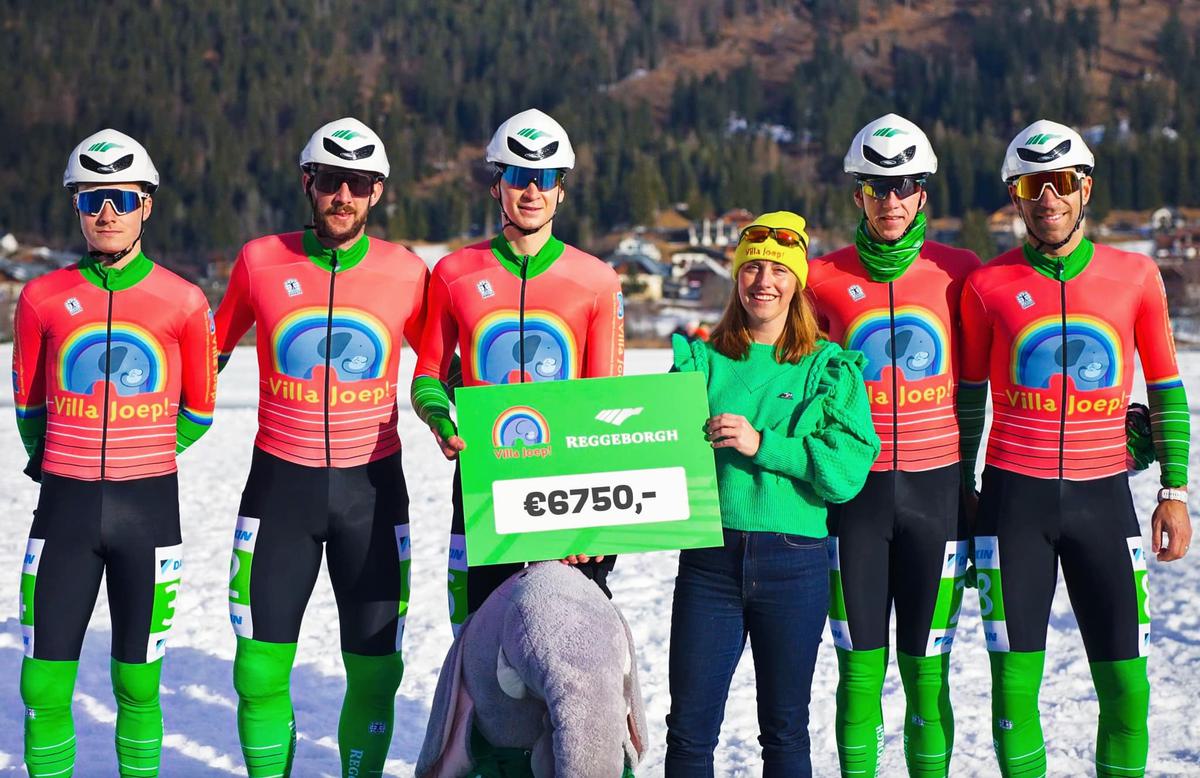
Amount raised at Weisensee event through auction of marathon ice skating suits